HearU
An app that makes you want to speak — and truly be heard.
Creating a safe space where users feel free to log honestly and face themselves.
Design Objectives
Setting the Scene
Built on Privacy and Trust
Before a user logs a single event, they need to feel this place is safe — and theirs.

Onboarding animation design, born from one observation:
Users usually open this app in a state where they least want to do anything actively. So we wanted the animation to convey one thing — opening the app itself is already an act of active help-seeking, making users feel "this is a space I chose for myself." That builds the first layer of safety and trust, and that choice is where the healing begins.
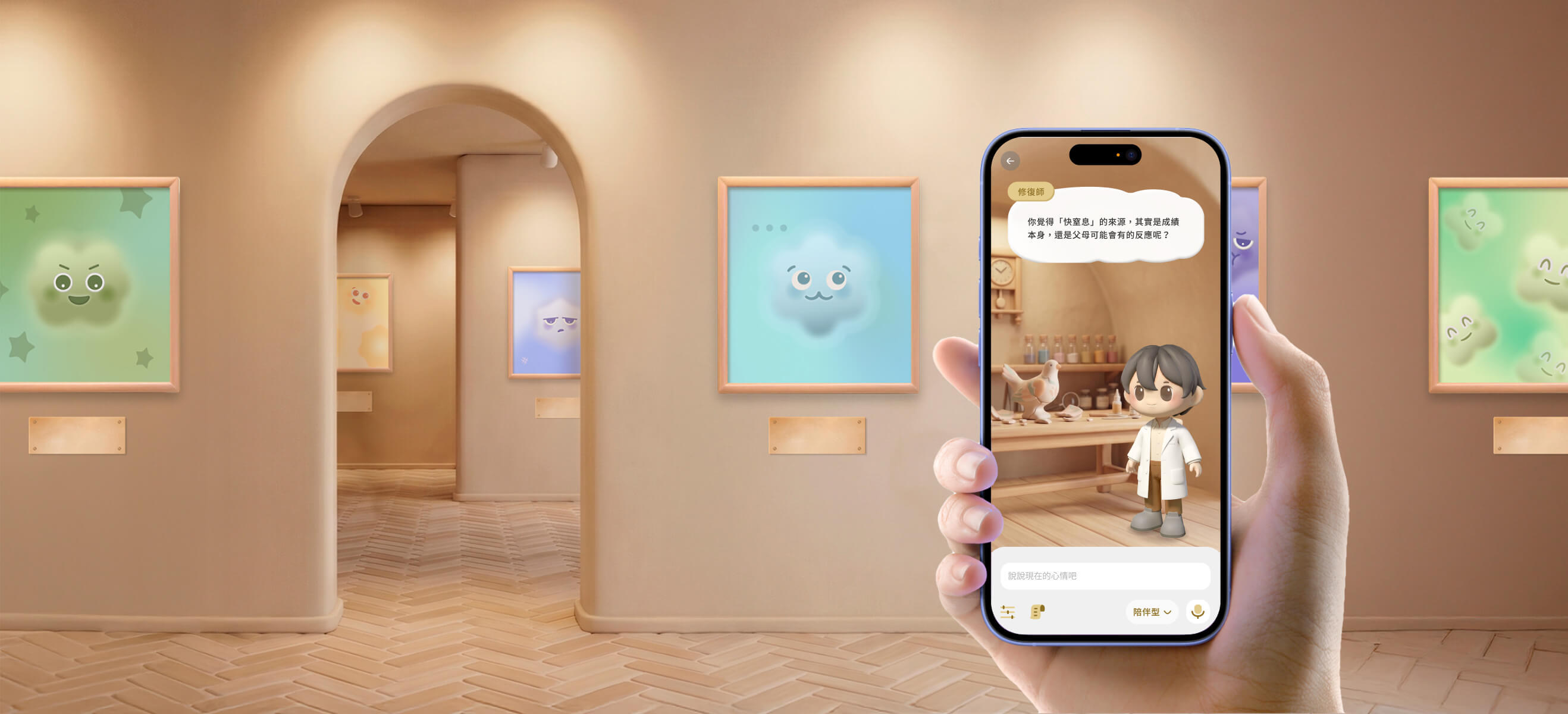

Why did we choose a "private gallery" as the core scene?
A gallery isn't just a place to store objects — it's a place that gives experience meaning. Users instinctively expect every piece on display to be precious.
We turn every emotional event into a piece of art. Each piece belongs only to the user — never judged, only kept. Psychologically, this sets a premise: who you are here doesn't have to match who you are outside.
Supporting the User
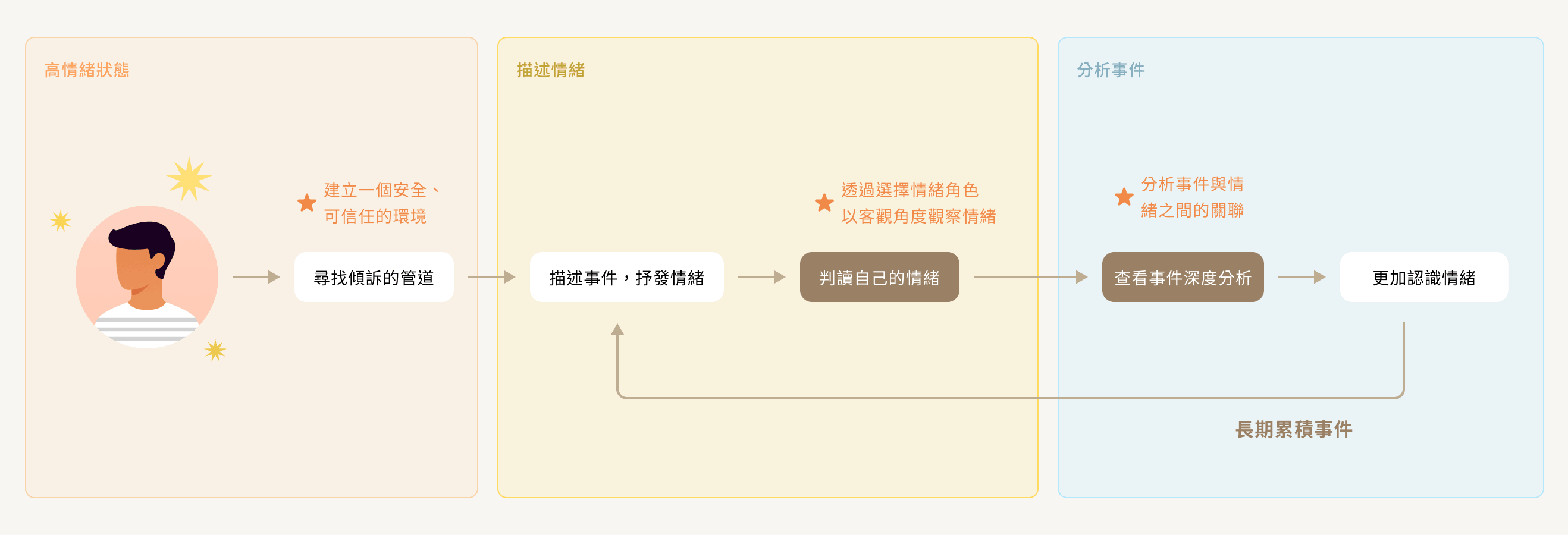
Recognizing and Processing Emotion with the Rational Mind
Helping users step back from their emotions and truly understand them from a third-person view.

It's hard to think rationally in the middle of an emotion.
Our solution for helping users step outside their own emotions was to turn emotion into something that can be "chosen" as a character — the act itself forces users to view their own state from a third-person perspective, shifting from feeling to thinking, instead of being overwhelmed.
This is a core mechanism in cognitive behavioral therapy, and we turned it into the product's most natural interaction.
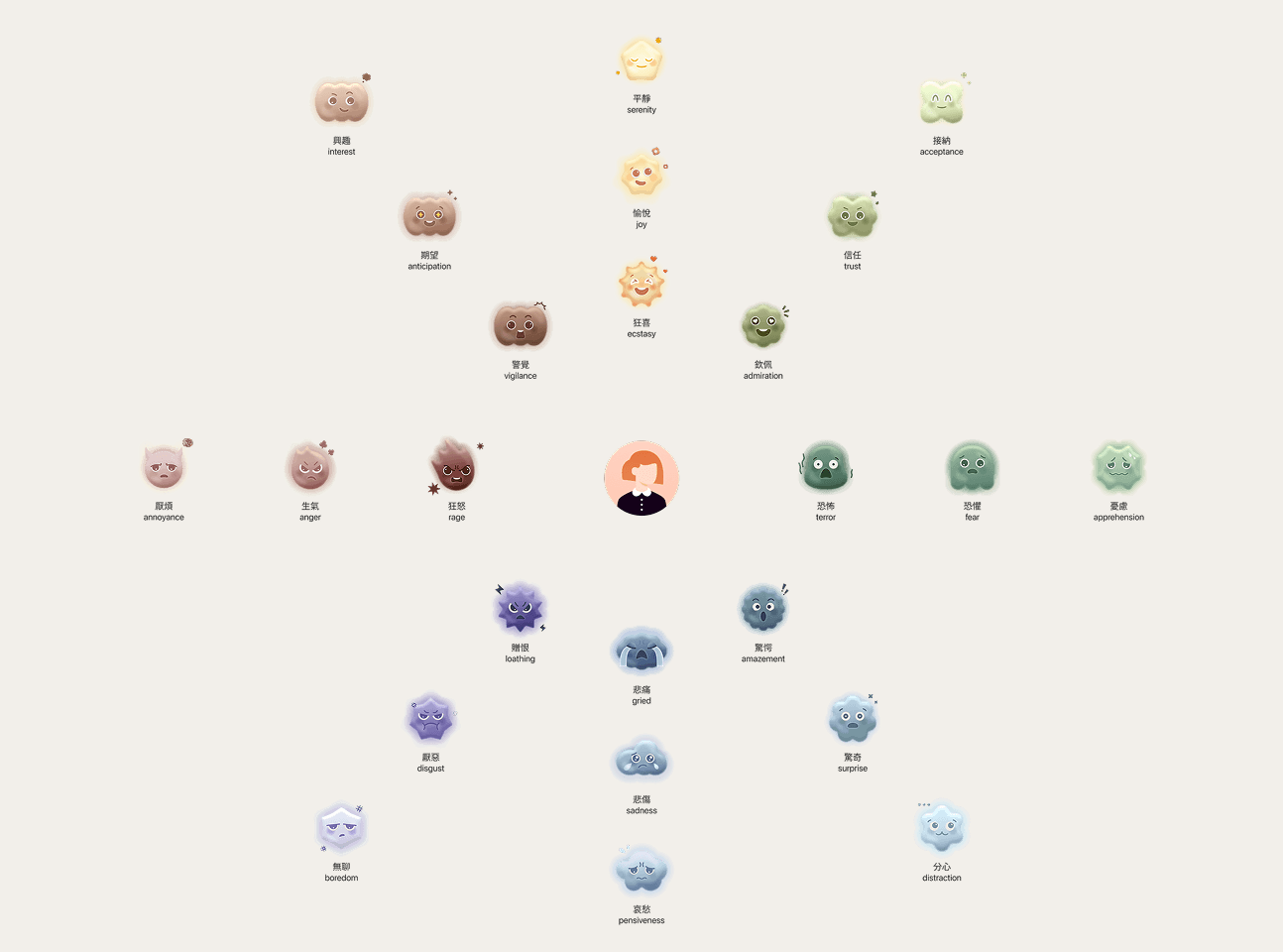
24 emotion characters to ease the user's guard
Given users' psychological state, we wanted the act of "choosing" to feel warmer — not about confronting fear, but about accepting yourself.
The emotion characters are modeled on Plutchik's wheel of emotions, bringing 24 emotions to life, each with its own color and distinct visual identity. The color choices are grounded in emotional psychology, so users feel an intuitive sense of recognition the moment they choose.
Even negative emotions feel engaging —
Giving Emotion Meaning
Reframing Feelings Positively, Building Deep Self-Awareness
Linking emotions to events to uncover the patterns in how you feel.
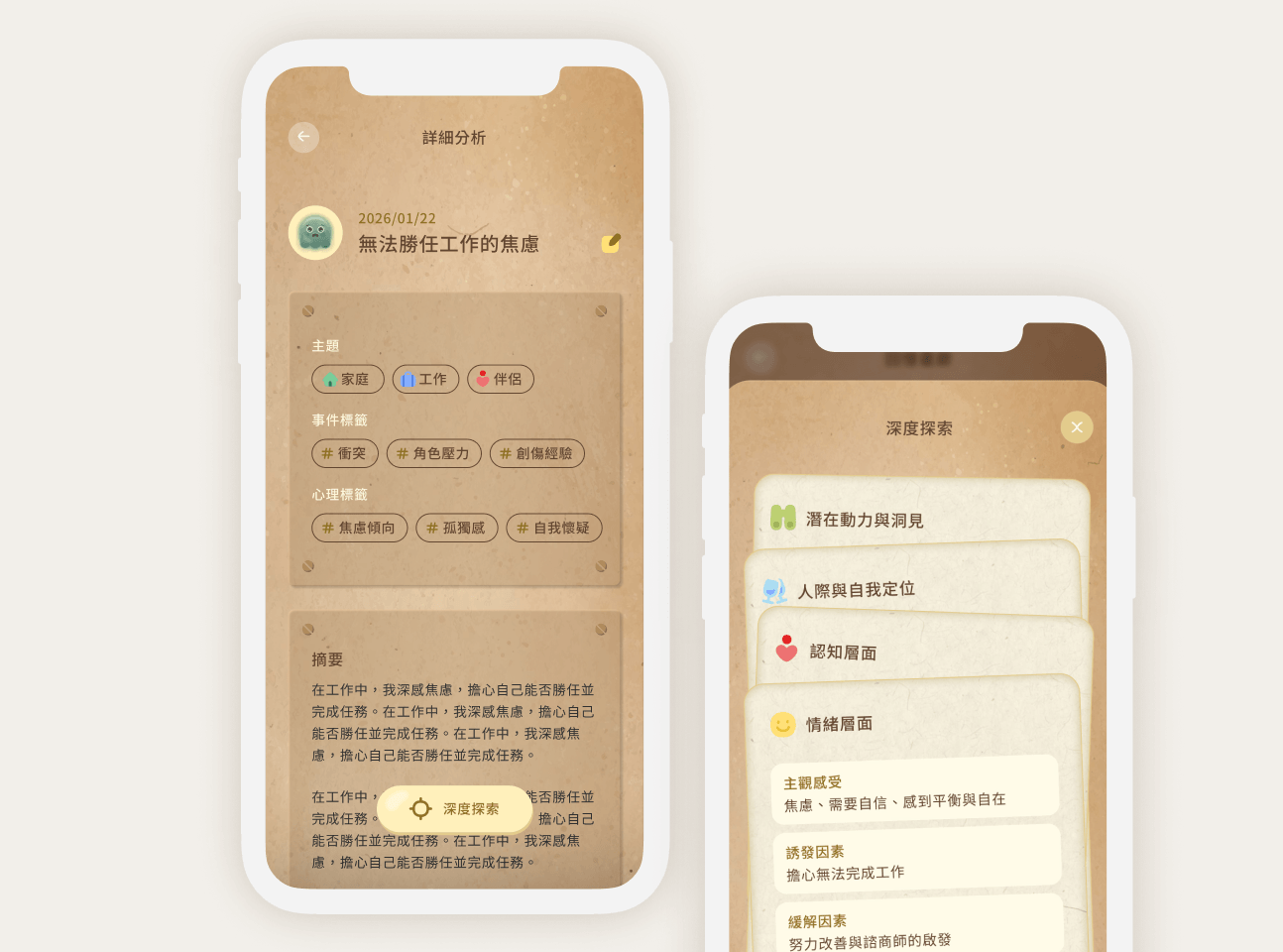
Emotion is expressed through the user's own words.
Based on the text a user writes, the system generates a multi-dimensional analysis for that single event.
We want every reflection to leave users feeling — deeply — that every moment of theirs has been truly heard and remembered.
Taking it further — how do we help users grasp the patterns in their emotions?
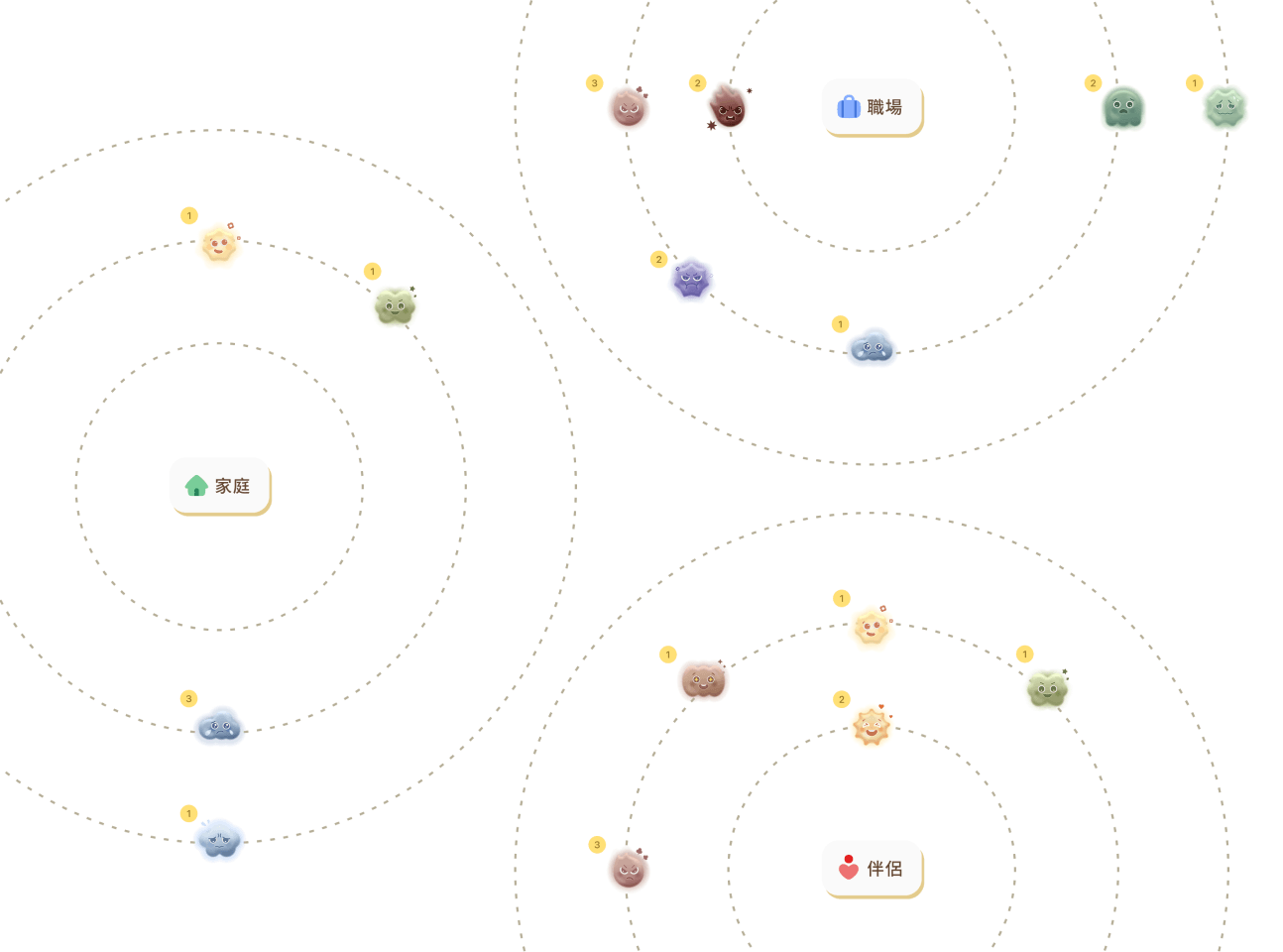
We link emotion logs to life events and categorize them, guiding users to cross-reference data over the medium-to-long term so they can objectively observe and understand their own behavior and thought patterns.
Emotions tend to arise in connection with specific situations.
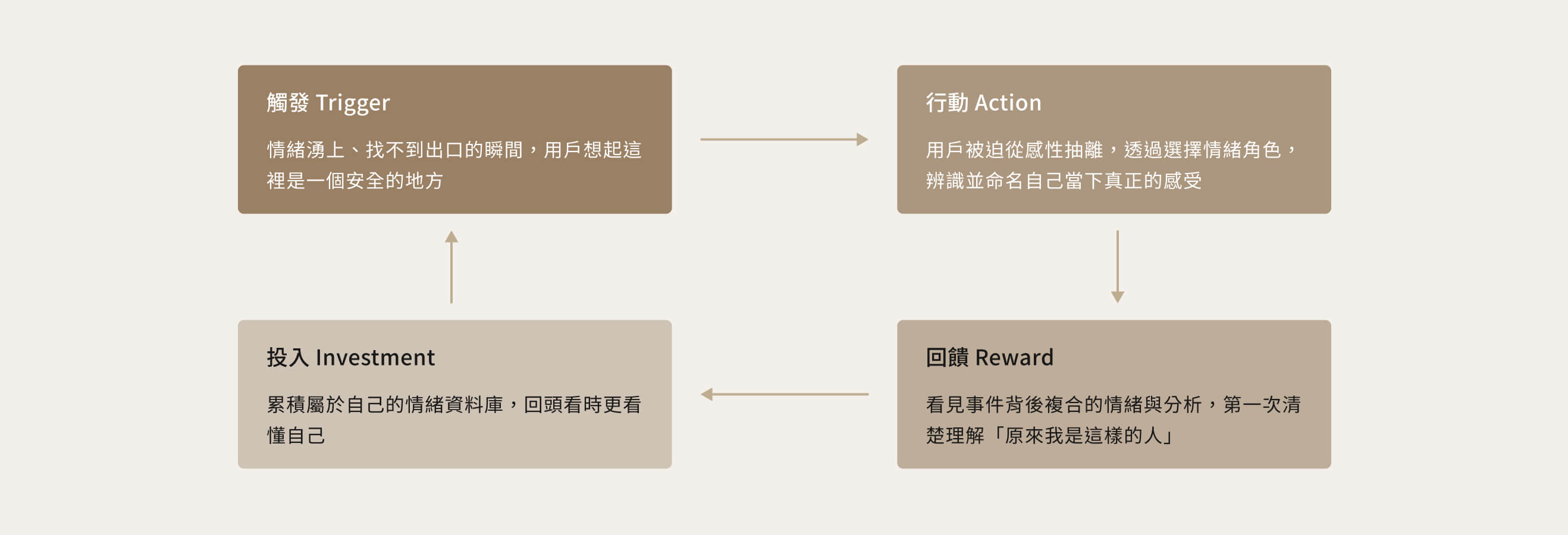
Product Hook
From trust to a reason to keep coming back
Ongoing Exploration
What's next,
helping users choose their emotions more precisely
What design can do isn't build a feature and expect people to use it.
It's understanding the user's psychology and context, and creating a space they genuinely want to keep coming back to.