When Healthcare Extends Into the Home
The design challenge isn't usability
How can elderly users with low tech literacy independently produce data doctors can actually use?
Design Objectives
Pre-test Guidance
Preparing for the test matters as much as the test itself
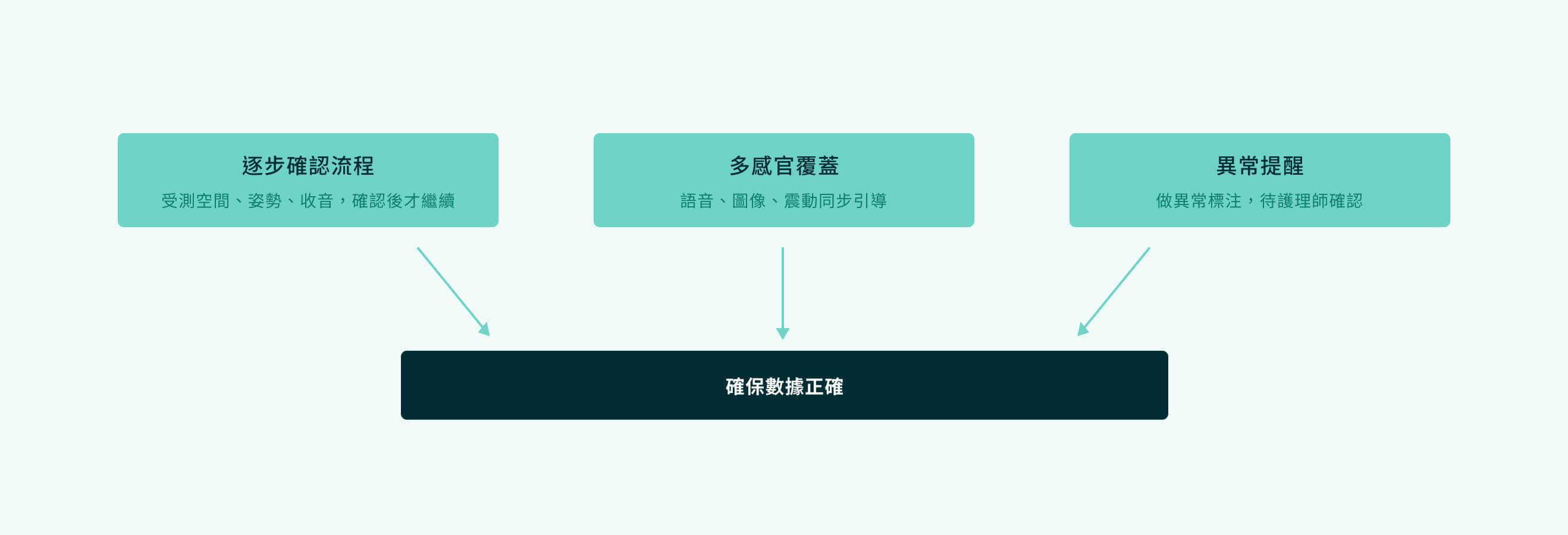
The test itself has many variables. To get accurate data, we have to proactively help elderly users eliminate them one by one.
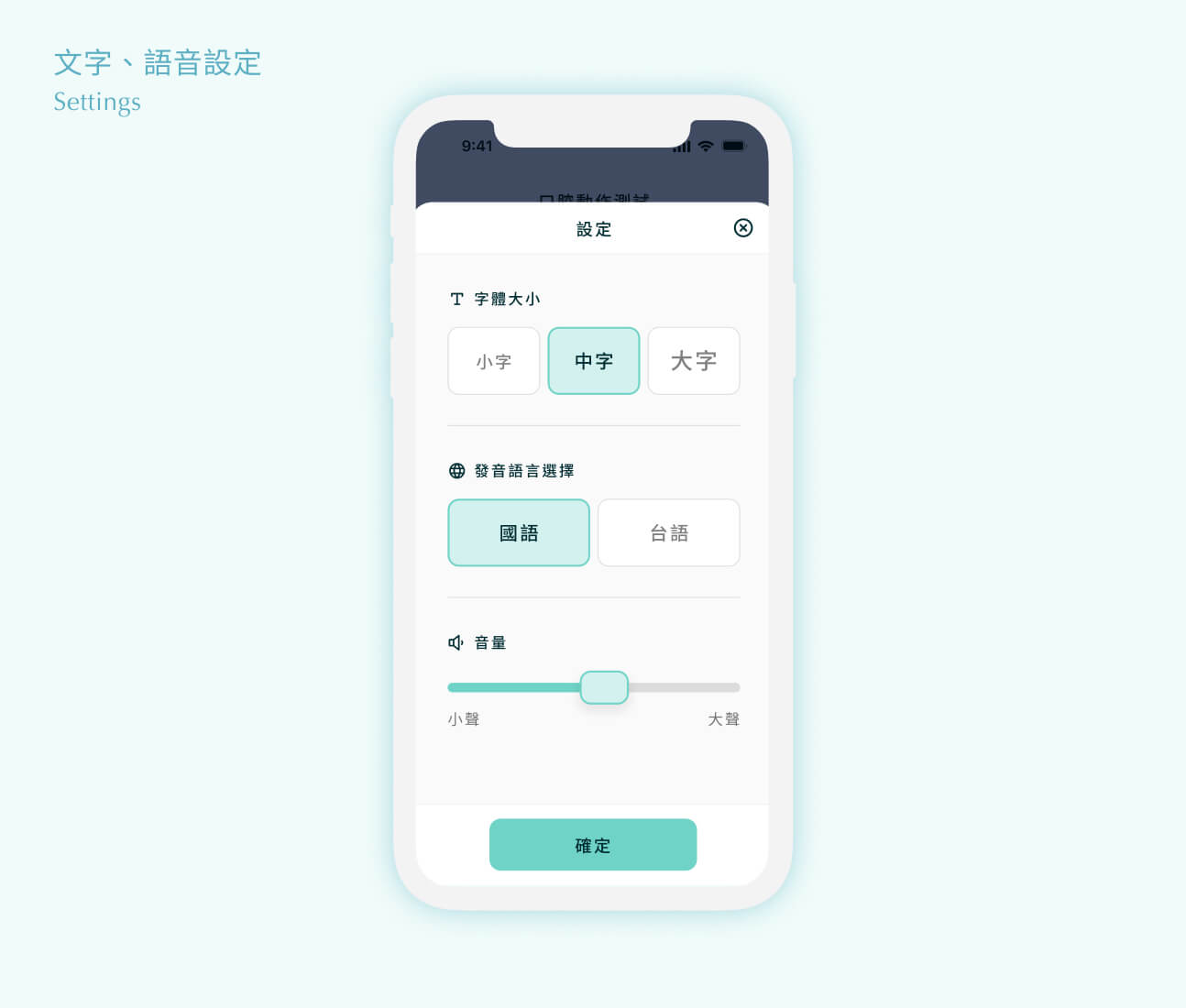
The system takes the initiative — it doesn't wait for elderly users to go find settings.
For users with low tech literacy, a setting that affects the test experience often goes unadjusted not because it isn't needed, but because they don't know it exists.
Some elderly users don't understand Mandarin, can't read small text clearly, or have declining hearing — these aren't edge cases, they're our default users. The system proactively confirms these settings, making sure every subsequent test runs under the right conditions.
We take every variable that affects test data seriously
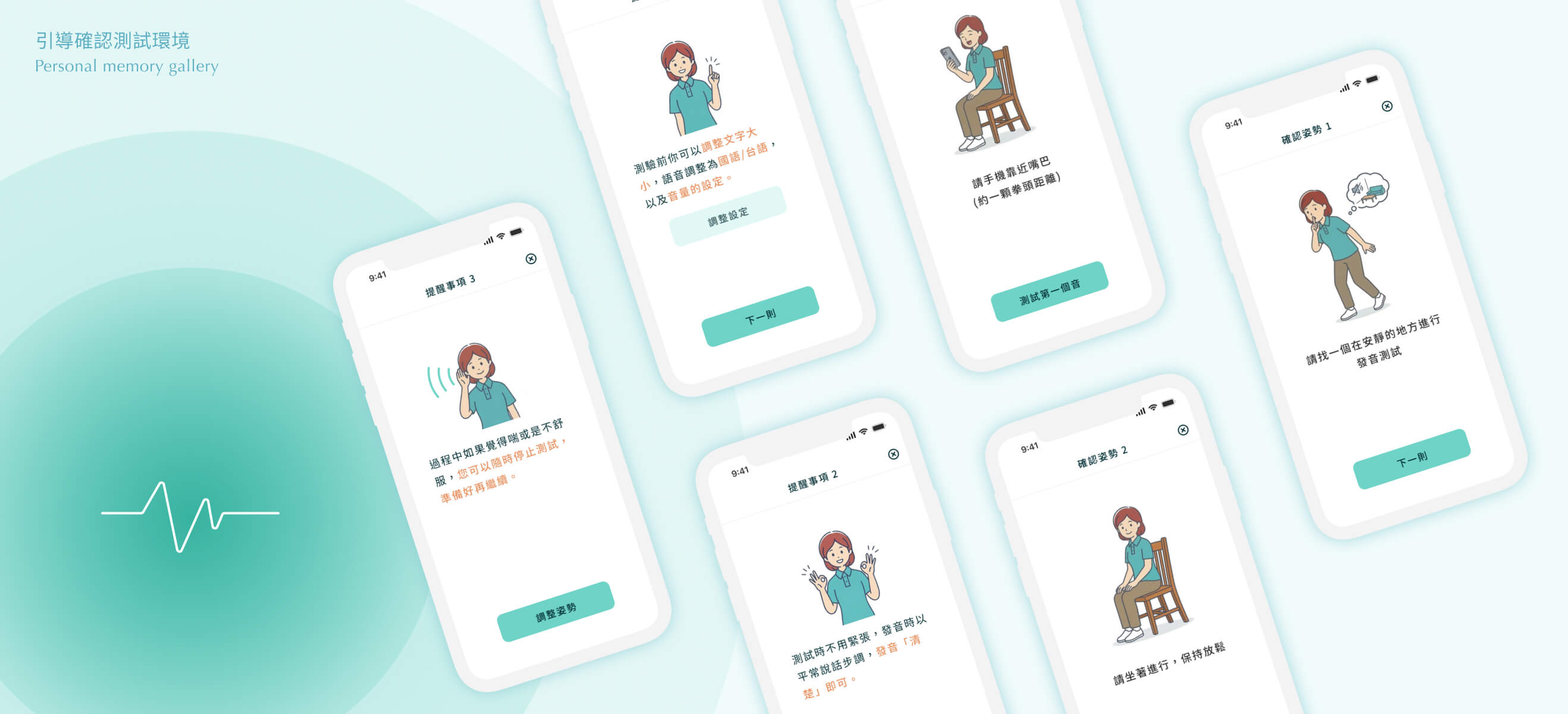
The quality of a swallowing test's data depends on the environment and physical state at the moment of testing — recording conditions, background noise, posture, microphone distance. Every detail affects the result.
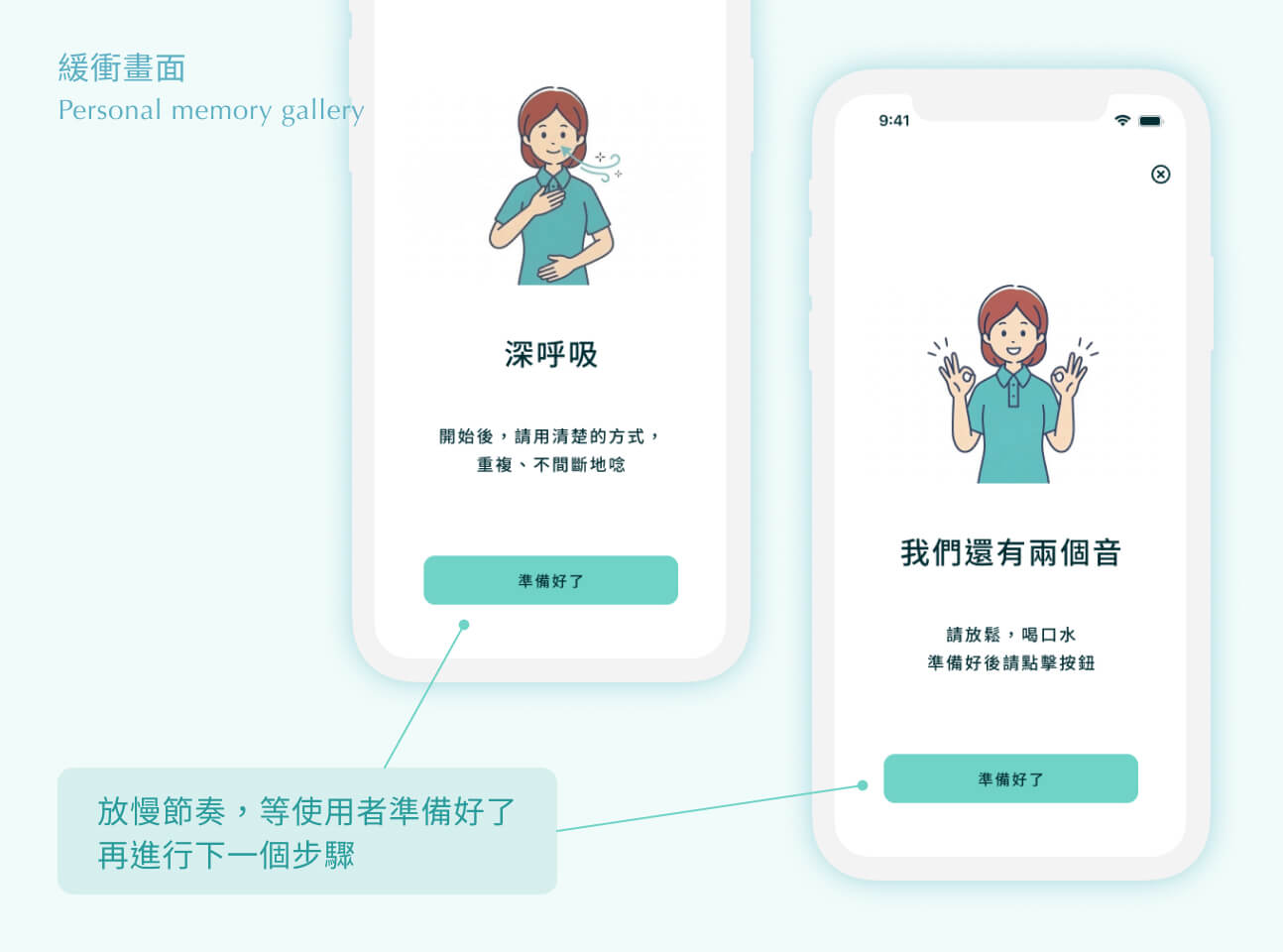
We turned each reminder into its own screen, saying only one thing at a time, paired with an image and voice guidance, and elderly users must actively tap to continue. This isn't about adding steps — it's about making sure every critical condition is genuinely confirmed.
During the Test
Design adapts to elderly users — not the other way around
During the test, elderly users only need to focus on the test itself. We clear every other obstacle in advance.
Bringing accessibility design into the test flow
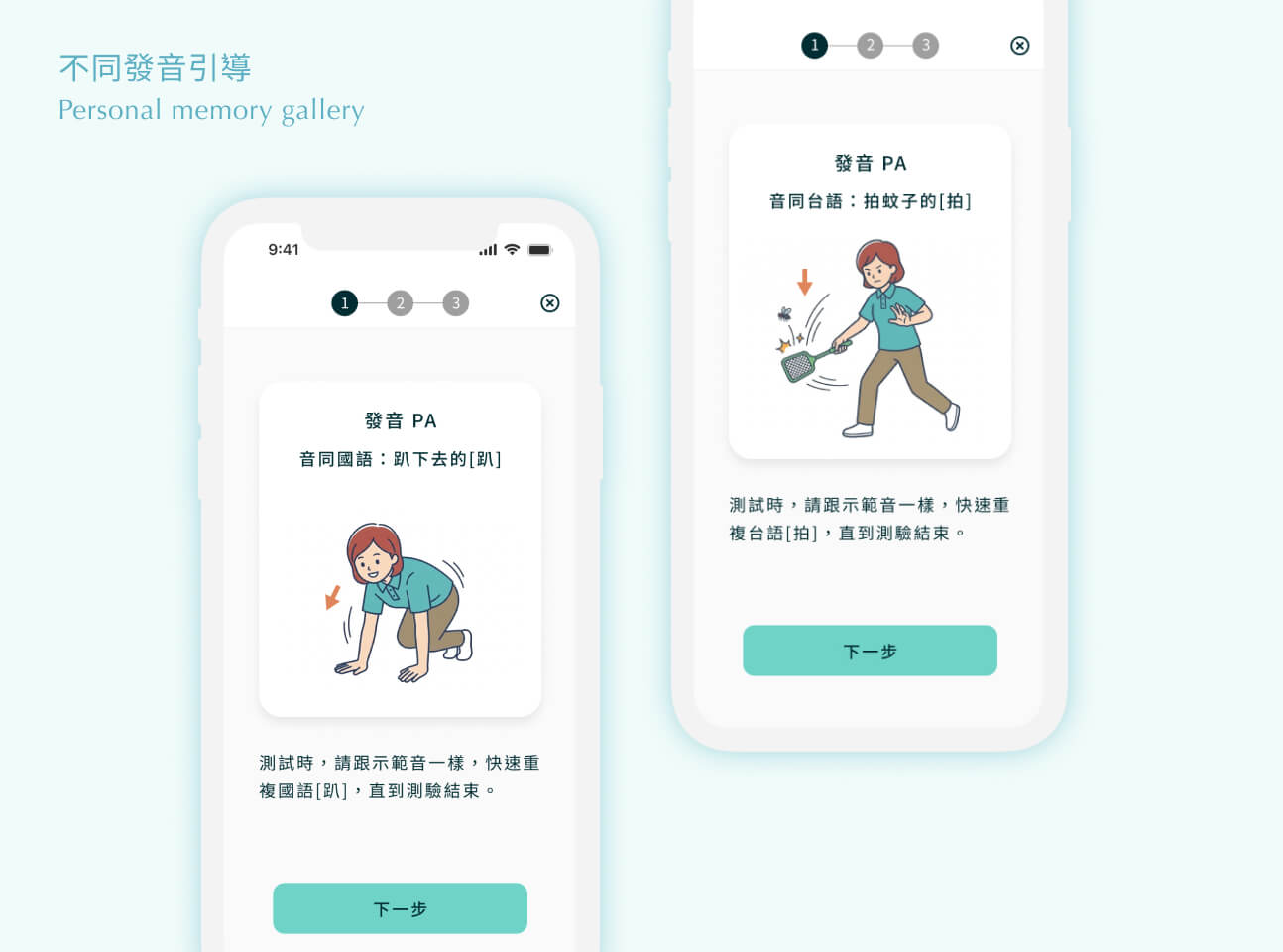
We designed around the environments elderly users are actually in and what they can realistically perceive.
Voice guidance with varied pronunciation ensures they understand, vibration alerts mark key moments, and animated diagrams explain oral articulation — every detail responds to a real-world condition.
Accounting for elderly users' emotions during the test
At the most critical point in the test, we found elderly users tend to feel most tense — falling behind the pace makes them anxious, and anxiety directly affects the quality of their pronunciation.
We slowed the test pace to half that of a general user, calibrated through actual testing. Slowing down eases their emotions, letting them focus on the swallowing and articulation itself.
More Than Just a Test Result
Data the healthcare system can actually act on
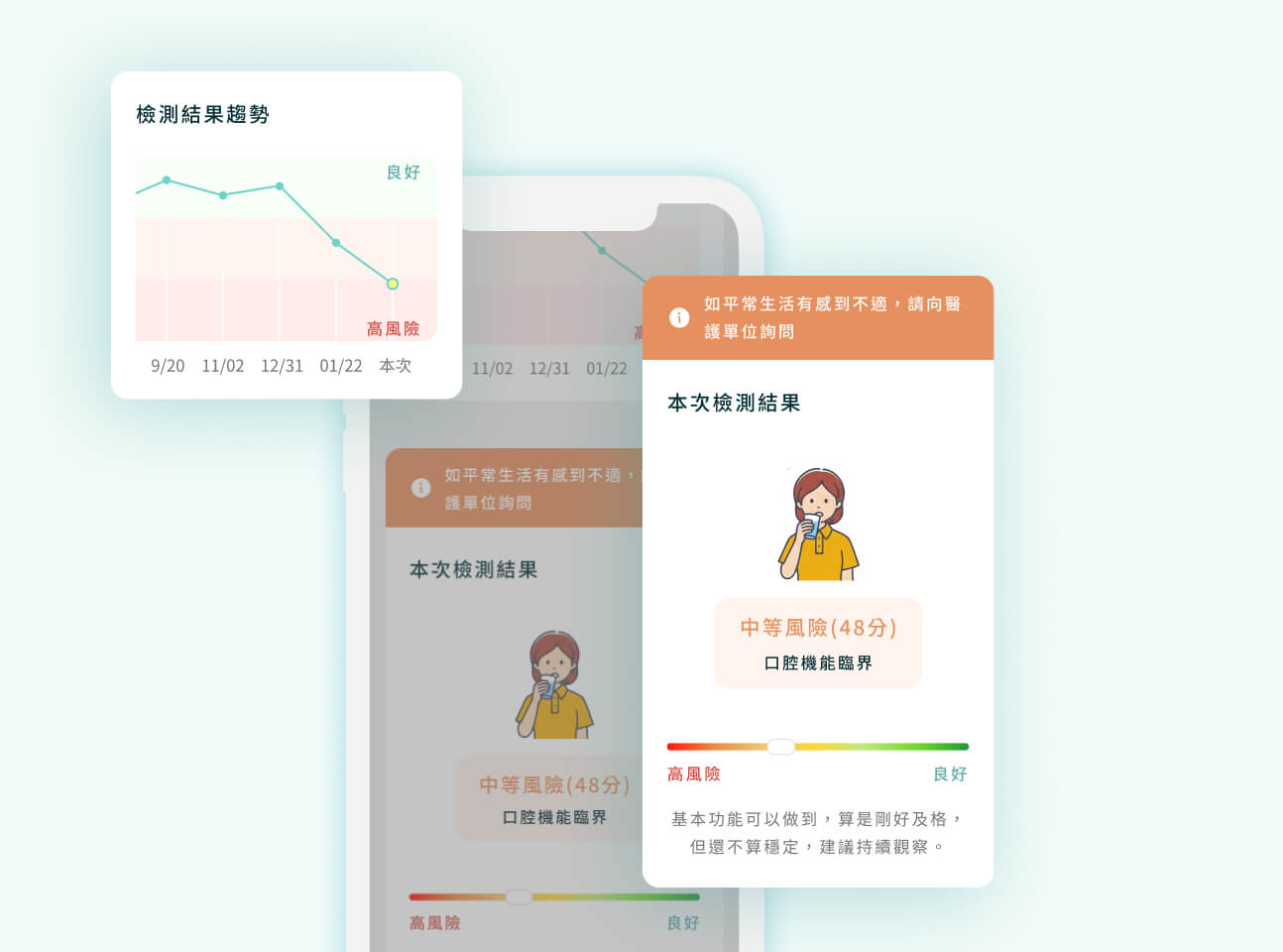
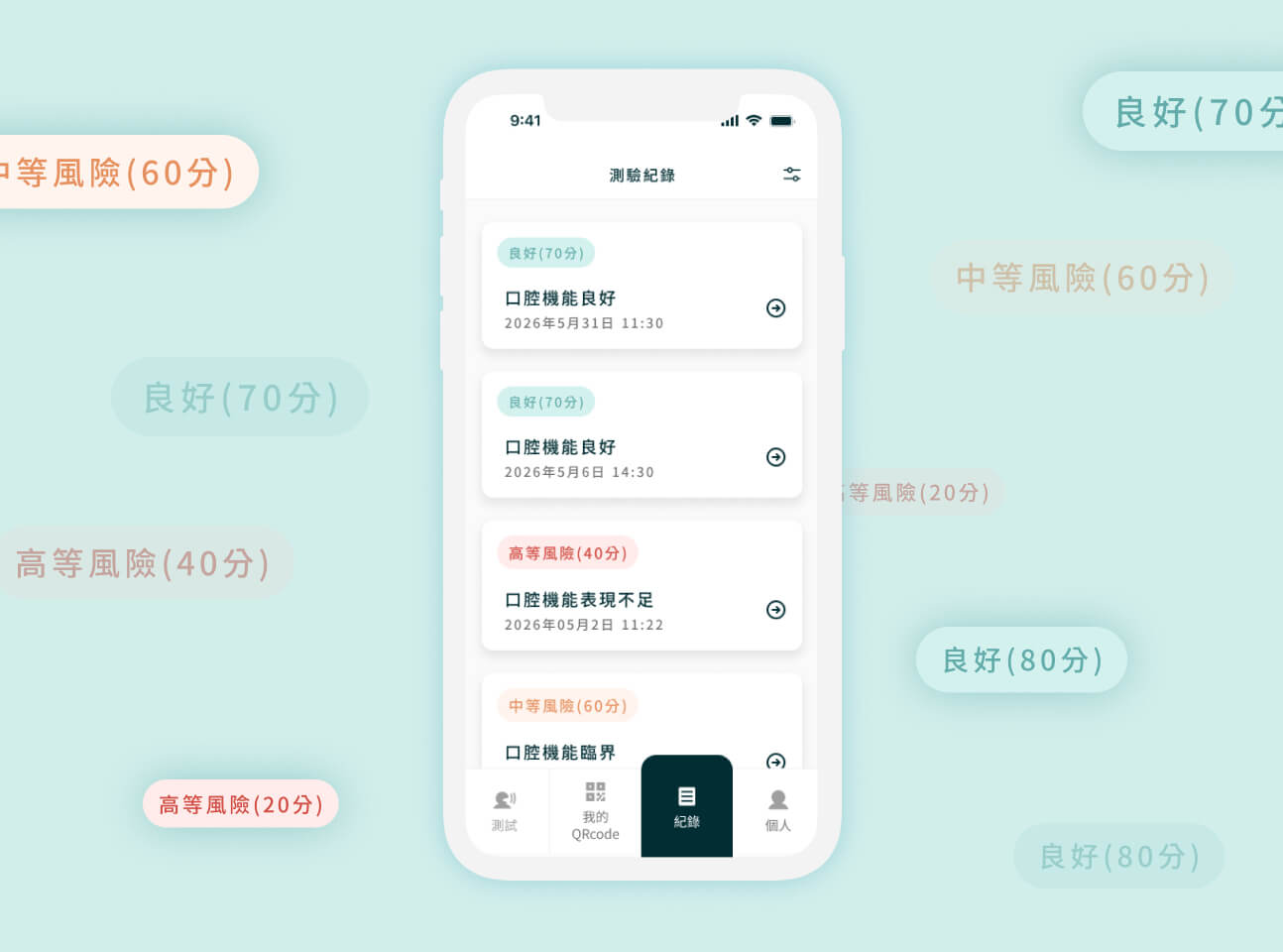
Aligning results with industry-standard grading, guiding next steps for each level
Test results exist to support a medical judgment
Swallowing function assessment has an internationally recognized standard — seven grades, ranging from clearly insufficient oral function to excellent, each with its own clinical meaning and recommended action.
We align test results to the corresponding grade and give clear next-step guidance for each one. The design question was how to give healthcare providers enough information to actually make a decision.
The data comes back abnormal — now what?
The real value of the test is acting early.
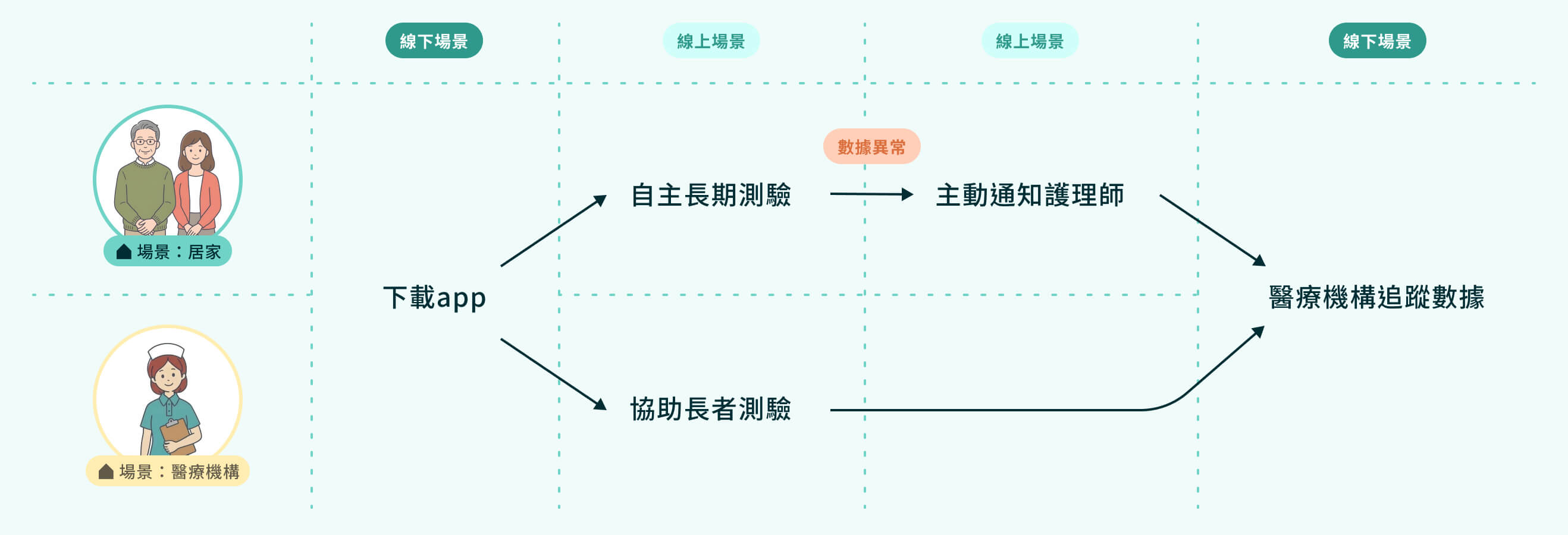
When a result shows abnormal swallowing data, that's this product's most critical moment. We need to actively connect the elderly user to the healthcare system, notifying a nurse to step in and confirm.
User Journey
A user journey that spans both ends
Ongoing Exploration
What's next,
making test results verifiable
What design can do isn't build a feature and expect people to use it.
It's understanding the user's psychology and context, and creating a space they genuinely want to keep coming back to.