Every senior designer has been through the junior designer stage. Looking back after years of refinement and growth, you'll find that those very experiences are what shaped you into a senior designer. I want to use a few diagrams to describe the differences in behavior patterns between senior and junior designers:
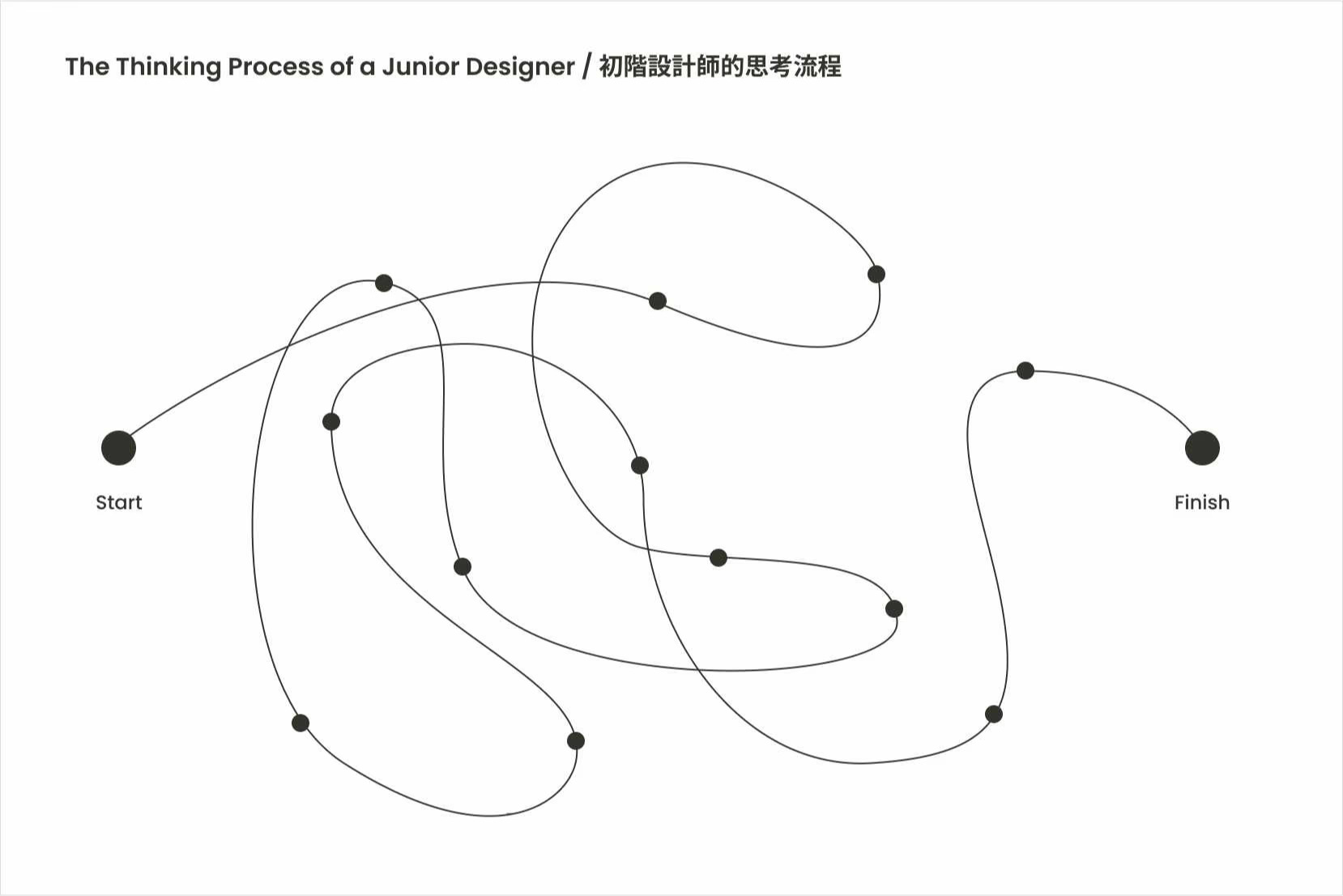
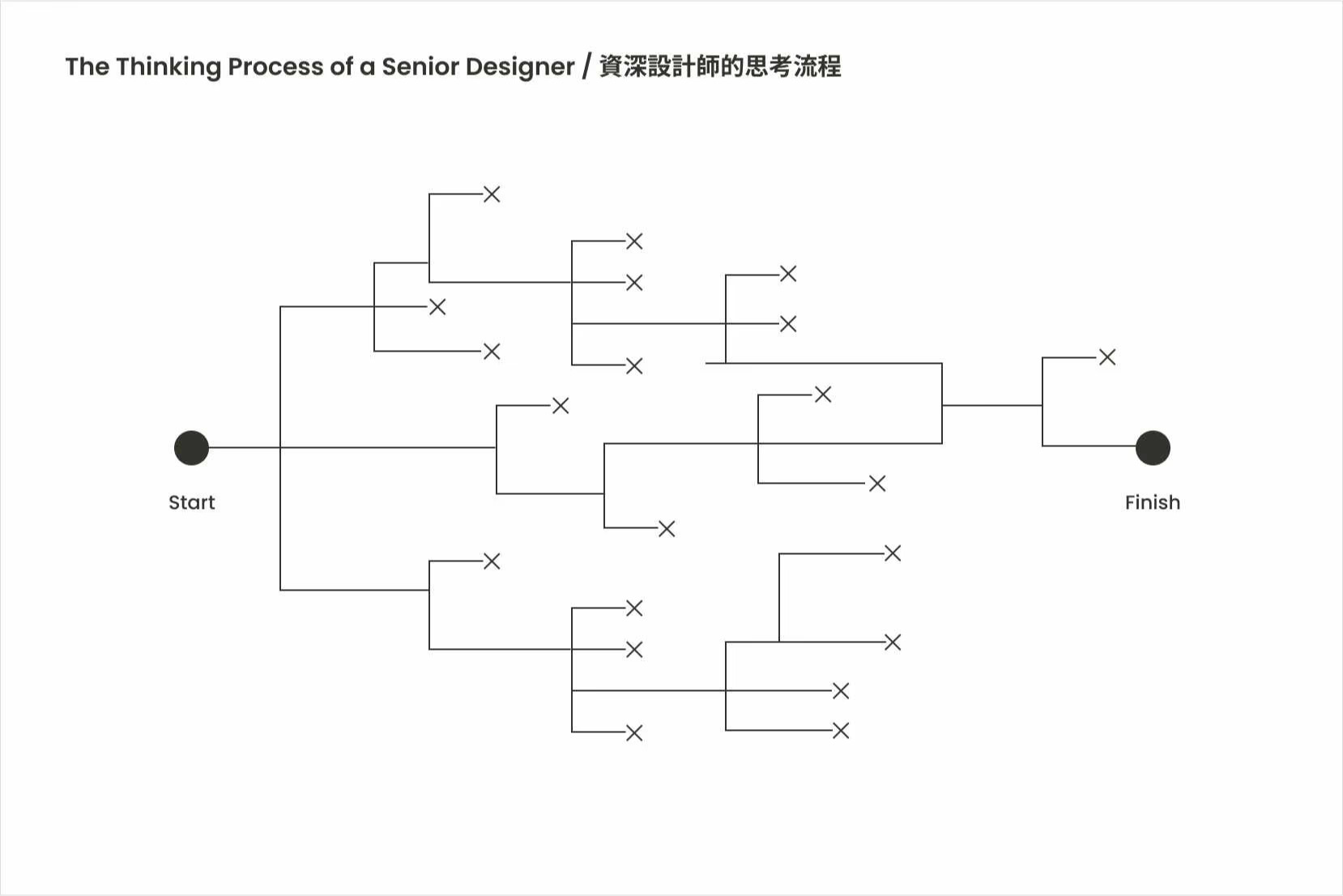
1️⃣ Thinking ProcessThinking process
Design problems are usually built up from multiple layers of cause and effect along with all kinds of smaller details. Senior designers can identify the key issue right from the start, then work through it layer by layer, gradually closing in on the core of the problem like solving a puzzle.
Junior designers, by comparison, tend to have a harder time distinguishing cause from effect, and can easily get lost among multiple issues—wasting extra time, and sometimes failing to land on the best solution at all.
2️⃣ Prioritization ApproachPrioritization judgment
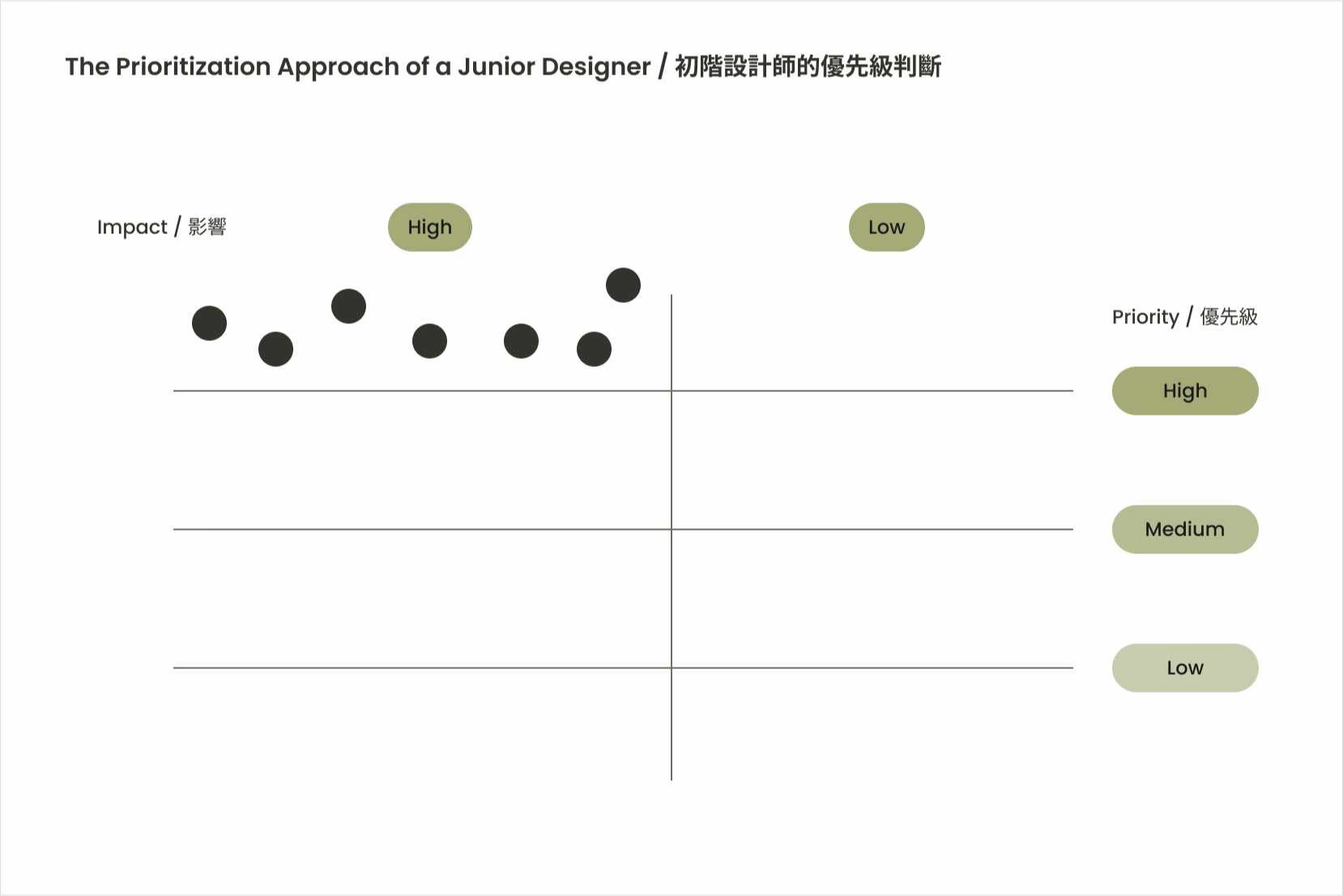
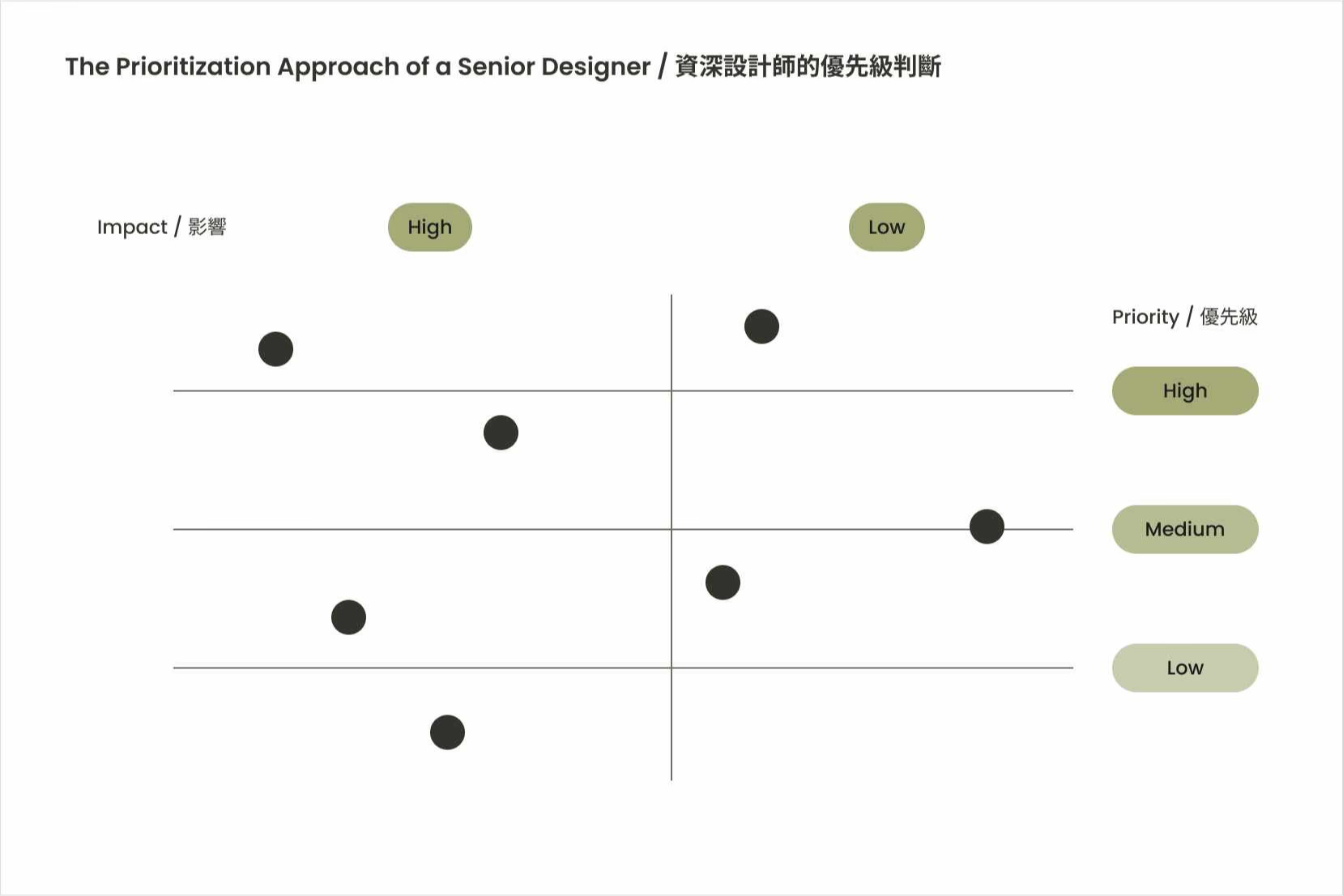
Every project comes with plenty of things to handle, but time is limited, and you can't attend to everything at once. When everything feels urgent, that's actually a sign that nothing has been properly prioritized.
We all understand this in theory, but when it comes to actually setting priorities, senior designers bring a real logical rigor to the process, effectively separating what matters most from what doesn't. One useful reference is the Impact-Effort Matrix—putting required effort on the horizontal axis and resulting impact on the vertical axis, dividing things into four quadrants to assess which tasks offer the best return.
We can also factor in the client's actual situation and goals for a more holistic view. This kind of assessment works especially well when discussing timelines with clients, and it also demonstrates a designer's logical ability to analyze problems.
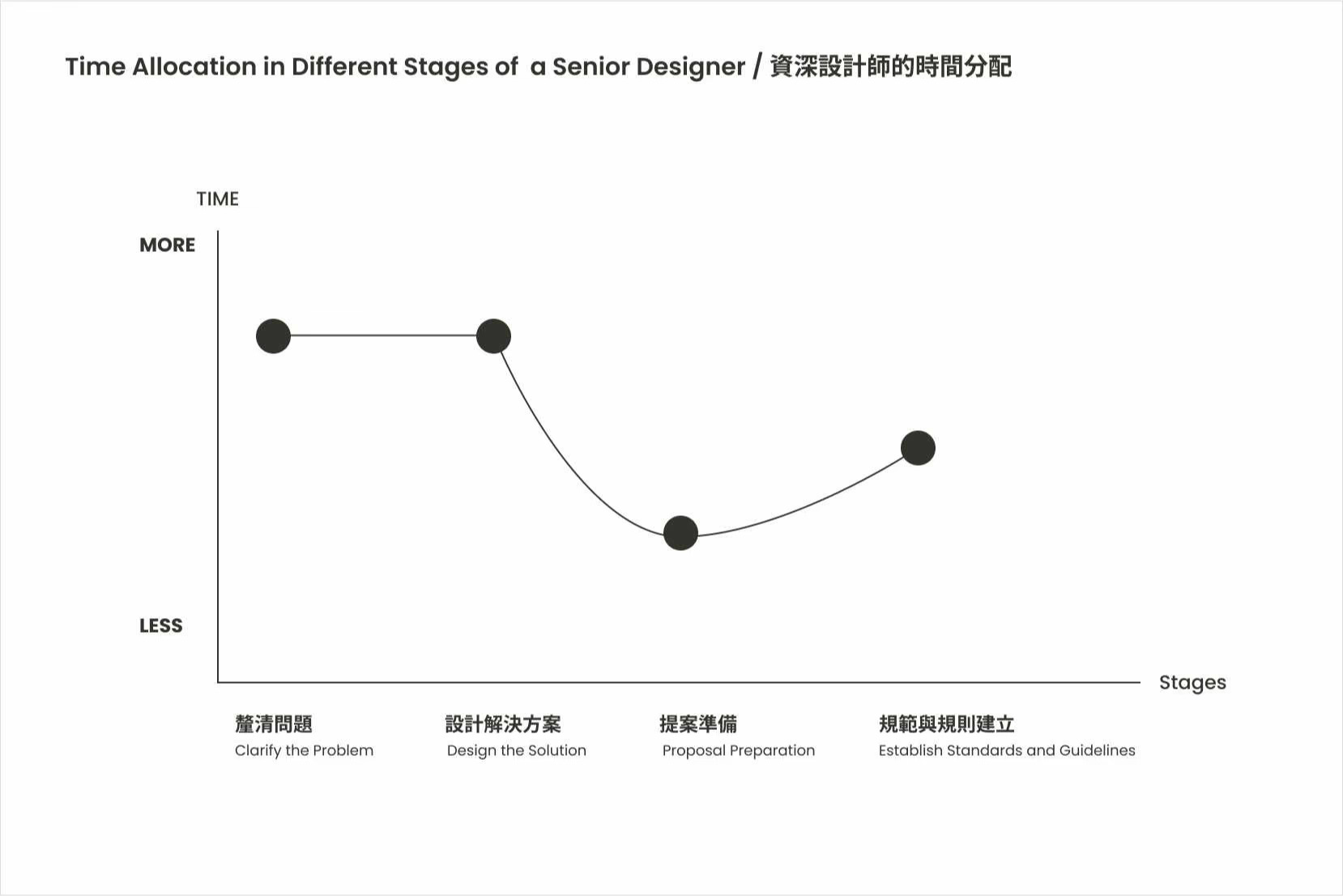
3️⃣ Time Allocation in Different StagesTime allocation
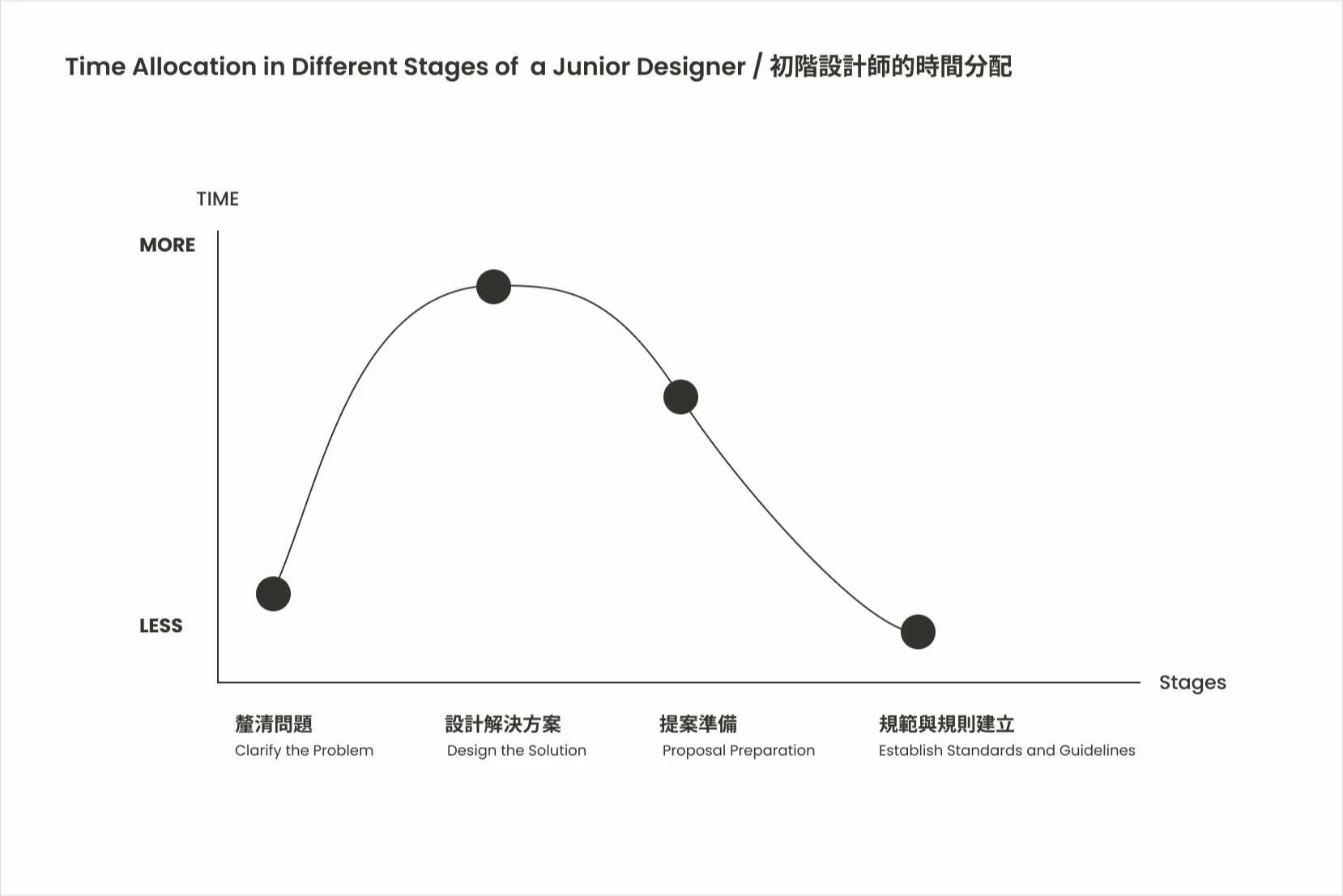
For junior designers, using tools to actually "design" tends to be the stage that eats up the most time, while limited experience means the problem-clarification stage doesn't dig deep enough into what the client actually needs. Senior designers, by contrast, invest more time upfront in clarifying the problem—once they clearly understand the core of what the client is asking for, they design a solution with precision.
A quick plug here: our studio, Yushi Design, offers a full client-needs interview service, and can propose implementation approaches tailored to different situations for clients or internal teams. If you'd like to learn more, feel free to visit our official website.
The documentation and guidelines that follow are just as important a piece of the puzzle. Running a brand touches on every dimension—social media content, physical collateral, branded merchandise, and everything needs to stay consistent. You can imagine just how many details need to be codified, and maintaining that consistency is measured in years—it's not something that happens overnight.
4️⃣ The Completion LevelLevel of design completion
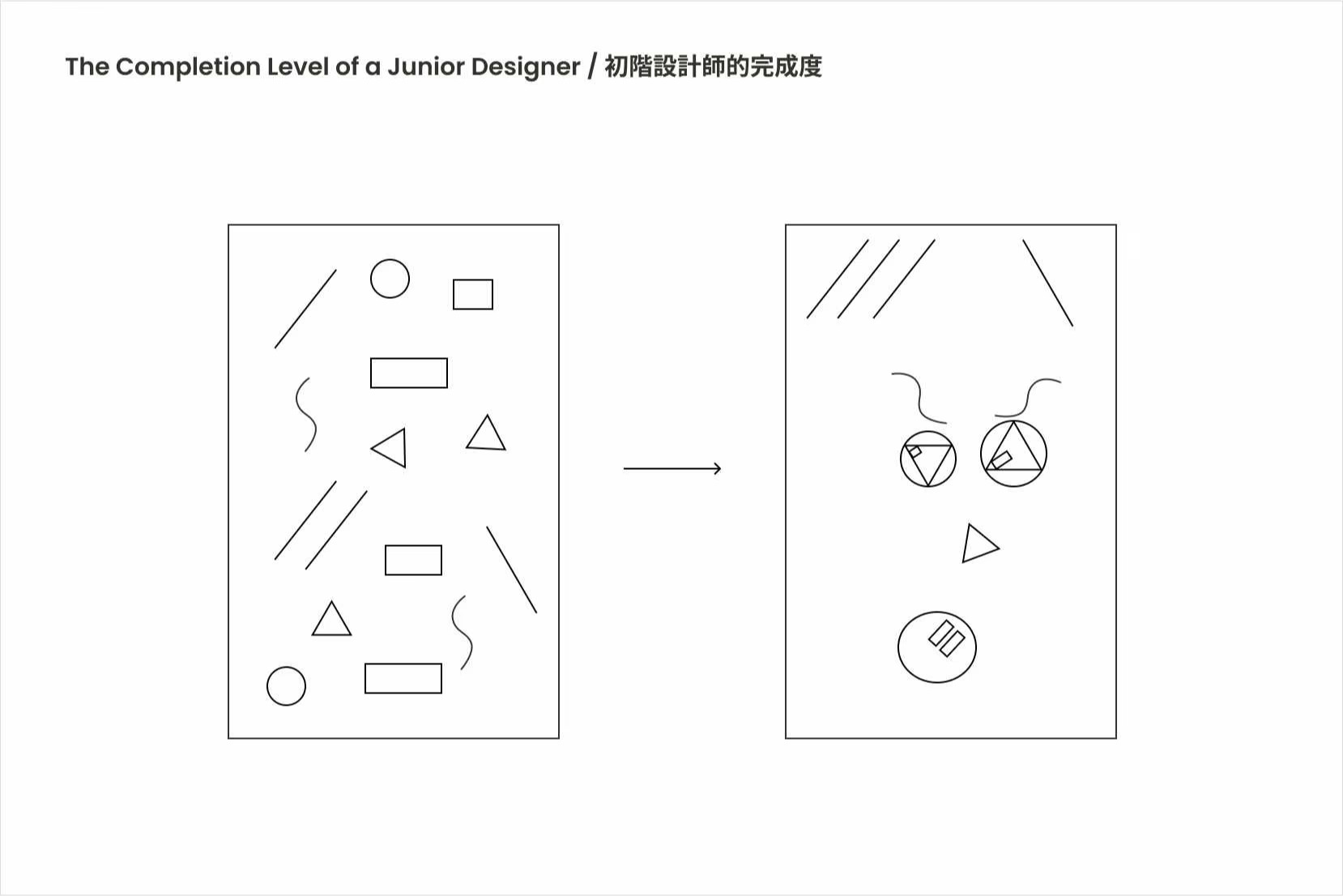
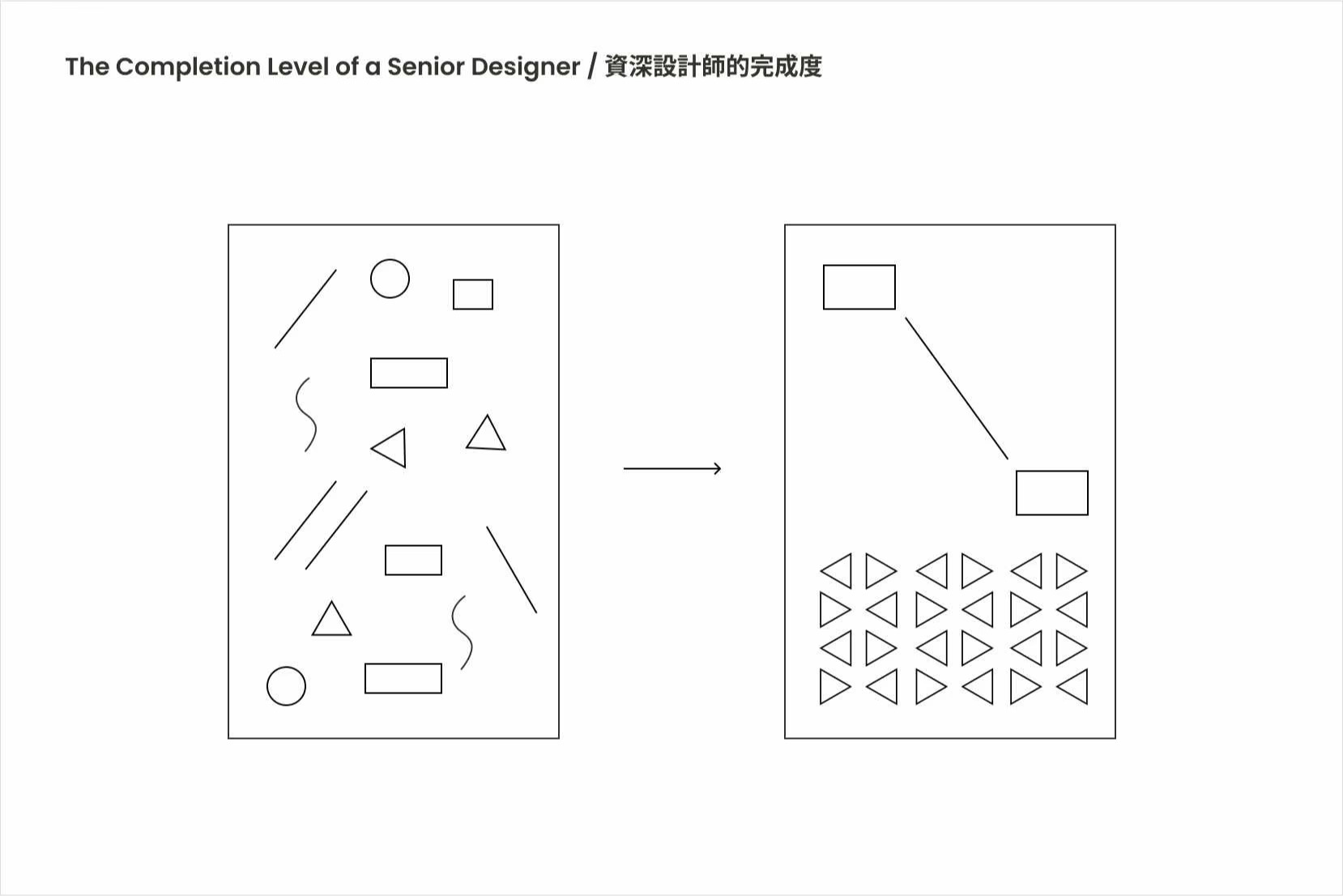
Junior designers tend to turn the brief they've received into a new story or design piece with strong visual impact. Senior designers, by contrast, focus more on distilling things down—pulling out the strongest highlights within the brief, then transforming and reinforcing them so the audience can carry forward the brand's existing story while strengthening and adding to its memorable points.
Do these observations and reflections resonate with you too? Feel free to leave a comment and share your thoughts with us. We may well put out a second round of this in the future!